Harvest work happens somewhere in Australia every month of the year. Crops ripen at different times in different regions, so for working holiday makers and candidates seeking seasonal agricultural work, understanding these patterns makes it easier to plan where to go, when to apply, and what kind of roles are available.
We’ve put together this guide to map Australia’s 2026 harvest trail state by state, so you can see what is picked, where and when. It also covers the visa and pay basics to check before you say yes to a role, plus what to pack for your first shift.
If you’re unfamiliar with Agri Labour Australia, we’re a licensed agricultural recruiter based in Brisbane, Queensland. We place candidates directly with verified growers, so the timings below come directly from the active seasons we recruit for.
Before you book travel or accommodation, take a look at our current seasonal harvest vacancies to see what’s available.
What is the harvest trail in Australia?
The harvest trail at a glance:
- What it is: A rolling cycle of regional farm work that moves between states as the seasons change.
- Types of work: Fruit picking, crop packing, tree pruning, planting and broadacre grain handling.
- When is it: Overlapping harvest seasons can create opportunities to move flexibly from one harvest job to the next.
- Visa eligibility: Certain agricultural work in eligible locations may count towards specified work requirements for Working Holiday Maker visa holders (subclasses 417 and 462).
- Workplace protections: Seasonal agricultural roles are covered by Australian workplace laws and relevant awards, including the Horticulture Award.
The harvest trail is the name for the seasonal work opportunities that become available as different crops reach harvest across the country. It’s not one set route. And because climate and growing conditions vary by region, one harvest may be finishing as another begins elsewhere.
For candidates who want to travel, the harvest trail is a way to see regional Australia while gaining practical farm skills and earning an income. For instance, you could spend summer picking cherries in Tasmania, then head to the Riverina for citrus season through the cooler months.
Do I need a visa to work on the harvest trail?
Many international candidates come to Australia on a Working Holiday visa (subclass 417) or Work and Holiday visa (subclass 462). If you want to stay a little longer, plant and animal cultivation work, such as fruit picking and packing, can help you meet the specified requirements for a second or third-year visa.
Not all farm jobs qualify, though. Eligibility depends on the type of work, where it’s carried out and your visa subclass. Before accepting a role to complete your specified work, check the current requirements and approved locations on the Department of Home Affairs website.
If you hold a UK passport, you no longer need to complete specified work for a second or third Working Holiday visa.
What will I be paid on a harvest job?
Before starting any role, make sure you understand how you’ll be paid, your expected hours, breaks and workplace safety rights. Agricultural jobs in Australia are covered by relevant industry awards. For most fruit and vegetable roles, that’s the Horticulture Award.
Many harvest jobs pay a “piece rate”, which means you’re paid for how much you pick or pack. Under the Horticulture Award, you are still legally entitled to a minimum wage guarantee. This means you must be paid at least the minimum hourly rate for the hours you work each day.
Piece rates must also be set so a competent worker can earn at least 15% above the minimum hourly rate for your classification. Your employer must also provide a signed piecework record before you start work under this arrangement.
You can review current rates and piecework rules on the Fair Work Ombudsman website. If anything is unclear, ask your employer or recruiter.
When does harvest season run in each state?
Here’s a general guide to some of the crops, regions and harvest periods you’ll find around Australia. If you’re planning to move between regions, look for harvests that run back-to-back.
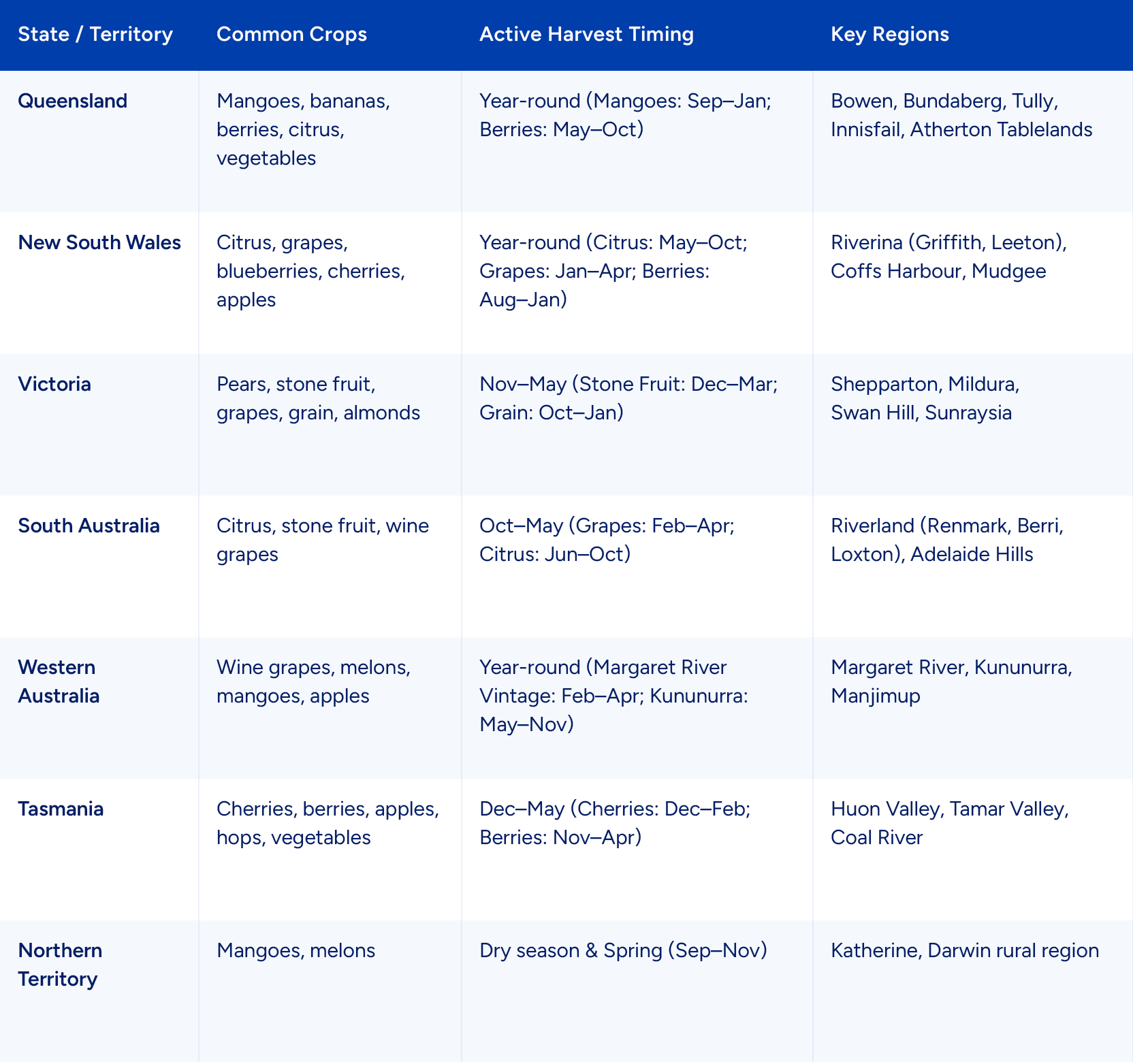 Harvest dates are a guide only. Seasonal conditions can bring harvests forward or push them back.
State-by-state harvest guide
If you know which region you want to work in, start looking 3 to 4 weeks before the expected harvest period. Popular agricultural regions can attract plenty of candidates, and accommodation can also be limited during busy periods. Planning ahead gives you more time to understand the role, organise travel and find somewhere suitable to stay.
You can also browse Agri Labour Australia’s seasonal harvest listings to see current opportunities.
Queensland harvest work
Queensland’s size and range of climates mean regional farm work is available across a wide range of industries.
Mangoes and bananas
Mango harvests take place across parts of northern Queensland, including around Bowen and the Atherton Tablelands. Banana production is concentrated in areas such as Tully and Innisfail, where bananas are picked almost all year round. The timing and length of individual roles will depend on the season and site.
Berries and vegetables around Bundaberg
Bundaberg is one of Queensland’s biggest growing regions, producing berries, vegetables and other crops throughout the year. Depending on the season, opportunities may include picking, packing and other harvest-related roles.
When to look for work in Queensland
Start checking Queensland vacancies in the weeks leading up to your target harvest. For mangoes, look from around August. For berries, start from April. Because Queensland covers several growing regions, opportunities can vary depending on how far you’re willing to travel.
New South Wales harvest work
New South Wales has several major horticultural regions, each with its own peak season.
Citrus and grapes in the Riverina
The Riverina is one of Australia’s main citrus and wine grape regions, with orchards and vineyards around centres including Griffith and Leeton. Citrus work generally becomes available through the cooler months, while grape harvest roles are more common during summer and early autumn.
Blueberries on the North Coast
The Coffs Harbour region is well known for blueberry production, with picking work generally running from late winter into early summer.
When to look for work in NSW
When planning for NSW harvests, start checking vacancies several weeks before picking begins rather than waiting for peak season. This gives you time to arrange transport, accommodation and any equipment required for the role.
Victoria harvest work
Victoria offers seasonal opportunities across horticulture and broadacre agriculture, with most harvests running from late spring through to autumn.
Fruit in the Goulburn Valley
Shepparton and the surrounding Goulburn Valley are well known for fruit growing, with pears and stone fruit among the crops harvested over summer and autumn. Different varieties ripen at different times, so roles can start and finish at different points in the season.
Mildura and Sunraysia
Mildura and the wider Sunraysia region grow grapes for the table, wine and drying, as well as citrus and almonds. Work may extend beyond picking to activities such as pruning, thinning and packing, depending on the crop and time of year.
Grain harvest
Victoria’s grain harvest usually runs from late spring into summer, creating seasonal work in northern and western parts of the state, including the Mallee and Wimmera. Many grain roles, such as header or chaser bin driving, need machinery experience.
If broadacre grain handling is more your style, view Agri Labour Australia’s grain harvest opportunities.
South Australia harvest work
South Australia offers seasonal agricultural work in several growing regions, including the Riverland and Adelaide Hills, both of which are an easy distance from Adelaide.
The Riverland
Renmark, Berri, Loxton and surrounding areas form part of the Riverland, one of the state’s main fruit-growing areas along the Murray River. Citrus, stone fruit and grapes are among the major crops grown in the area. Their different growing cycles can create opportunities at different points of the year.
Western Australia harvest work
Western Australia’s growing regions stretch thousands of kilometres, from the tropical north to the cooler south-west. Plan your route early, as moving between them takes time.
Margaret River and northern WA
Margaret River’s grape vintage generally takes place in late summer and autumn. Around Manjimup in the south-west, apples and other fruit and vegetable crops provide more seasonal work, with apple picking generally from late summer into autumn. In the far north, the Kununurra area grows melons and mangoes, with work running through the dry season.
Before heading to a regional or remote part of WA, organise your accommodation and transport and check what local services are nearby. Towns can be hours apart, and beds can fill quickly in peak season.
Tasmania harvest work
Tasmania has a bustling summer harvest period, with cherries, berries, apples and vegetables among the main crops.
Cherries and berries
Cherry harvesting typically takes place from late spring into summer, in areas such as the Huon Valley, Tamar Valley and Coal River region. Berry picking runs for longer, from around November to April, and apple picking follows from late summer into autumn.
Because some harvest windows are short, it helps to plan early and keep an eye on current vacancies.
Northern Territory harvest work
The Northern Territory is Australia’s largest mango-growing region. Picking starts around Darwin from mid-August, then moves south to Katherine, where the season runs for about another six weeks. Melon picking runs through the dry season, from around May to October.
If you’re considering work in the NT, plan for the heat. Many farms sit 20 to 80 km from Darwin and Katherine, so check how you’ll get to work before you arrive.
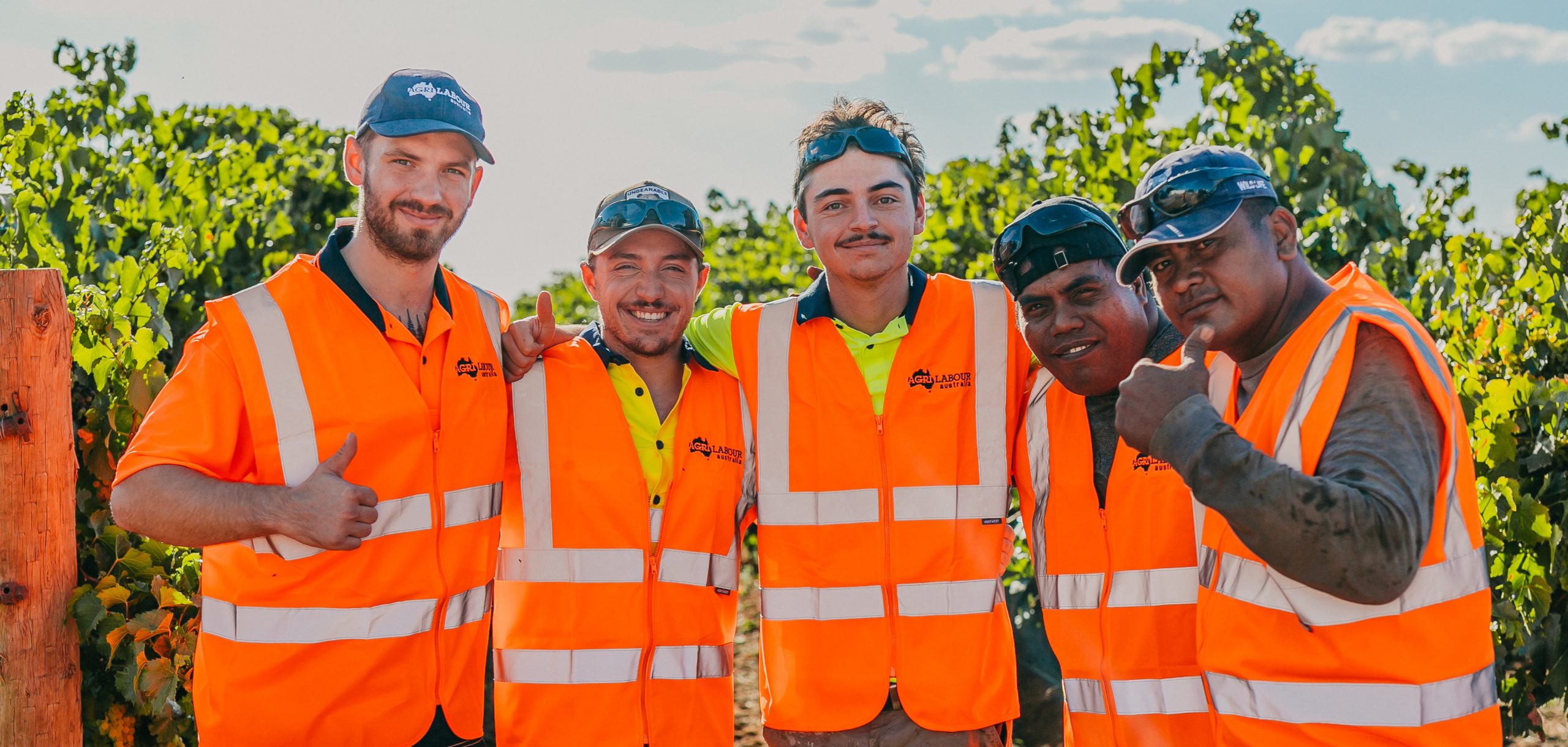
What should I bring to a harvest job?
A little preparation can make your first few days on the farm much easier. Every site is different, so check your job description and any instructions from your recruiter before you arrive.
Here’s a helpful packing checklist to get you started:
- Work boots: Sturdy, enclosed footwear is essential for many farm roles. Some sites require steel-capped boots, so double-check before buying.
- Comfortable, durable clothing: Pack clothes suitable for physical work, including long pants and long-sleeved shirts to protect you from the sun, scratches and dirt..
- Sun protection: A hat, sunglasses and sunscreen are must-haves for outdoor roles, particularly during warmer months.
- Wet-weather and warm clothing: A rain jacket and extra layers will help you prepare for changing weather and early starts.
- “High-vis” clothing: Depending on the job, you may need high-visibility clothing. Confirm if your employer will provide this.
- Gloves: Handy for picking or pruning and to keep your hands safe. Ask whether they are supplied.
- Reusable water bottle: Bring a large, refillable water bottle to help you stay hydrated throughout the day.
- Packed lunch and snacks: Many farms are quite far from the shops, so bring enough food to last the day. A cooler bag helps keep it all fresh in the heat.
Finding reputable seasonal agricultural work
When searching for seasonal farm work, look for employers or recruitment agencies that are upfront about the role, pay and working conditions. Before accepting a position, take the time to understand who you’ll be working for and what’s expected of you.
Working with a recruiter who specialises in agriculture can make this process easier. At Agri Labour Australia, we work exclusively in agriculture and connect candidates with opportunities across regional Australia. Our team provides guidance and support throughout the recruitment and placement process.
Ready to line up your next harvest? Browse our current seasonal harvest vacancies or register your profile so our recruitment team can contact you when roles open in your chosen region.
Frequently asked questions
When is the best time to find farm work in Australia?
There’s no single best time to find farm work. Australia has active harvest periods year-round across different states and crop types. Check current job listings 3 to 4 weeks before expected regional harvest start dates, as local weather conditions can change crop timelines.
What is the harvest trail in Australia?
The harvest trail describes seasonal agricultural job opportunities that become available as different crops mature across Australian regions. Candidates move between regional locations throughout the year to follow crop cycles, earning income and building agricultural skills along the way.
How much do fruit pickers get paid in Australia?
National employment awards govern agricultural positions in Australia, mostly the Horticulture Award. Piecework rates must allow a competent worker to earn at least 15% above the minimum hourly rate for their classification, backed by a legal daily minimum wage guarantee. Check the Fair Work Ombudsman for current pay rates.
What types of seasonal roles are available?
Seasonal farm roles vary by crop type, location, and employer requirements. Entry-level positions include fruit picking, crop packing, tree pruning, planting, and field maintenance. Technical roles involving machinery operation or forklift driving require specific licences or past operational experience.
Do I need a visa to work in Australian agriculture?
International candidates must hold a valid visa with work rights issued by the Australian Government Department of Home Affairs. Common visas include the Working Holiday visa (subclass 417) and the Work and Holiday visa (subclass 462). Always check your individual visa work conditions before accepting a job.
Does agricultural work count towards a Working Holiday visa extension?
Plant and animal cultivation work in eligible postcodes can count towards a second or third Working Holiday Maker visa. Always check the current Department of Home Affairs specified work eligibility criteria, approved postcodes and employer details before accepting a position.
How can I find seasonal work with Agri Labour Australia?
Agri Labour Australia recruits candidates for verified seasonal agricultural roles across all Australian states and territories. You can view active job listings on our website, submit online applications, and register your profile to receive direct placement support throughout the recruitment process.