Let’s connect at the Cotton Conference – on now!

This week, the Agri Labour Australia are exhibiting at the Australian Cotton Conference on the Gold Coast. From Tuesday 7 August until Thursday 9 August, you’ll find us at Booth 72 at the Gold Coast Convention & Exhibition Centre.

The Cotton Conference is all about connecting new and experienced farmers, agronomists and researchers, brands and marketers, students, supply chain partners, industry groups and cotton groupies. Together, we’ll look at the challenges and opportunities facing cotton, share and learn from one another, and listen to some of the world’s best cotton experts.

Our Managing Director, Account Managers, Permanent Recruitment Managers and People & Culture Manager are holding the fort at Booth 72. We encourage all attendees to stop by and hear about our workforce optimisation capabilities and latest cotton recruitment projects.

ALA to exhibit at the poultry and milling industry’s premier annual event

A cohort from Agri Labour Australia (ALA) will exhibit at the 2018 Poultry Information Exchange (PIX) and Australasian Milling Conference (AMC). The joint event is being held at the Gold Coast Convention and Exhibition Centre from Sunday 3 June until Tuesday 5 June. ‘Supply Chain Opportunities – Farmers to Consumers’ is the theme of this year’s conference, which will feature the latest in innovation and information from industry leaders around the world.

“We’re looking forward to hearing from industry innovators, catching up with clients and connecting with new operators in the poultry and milling space.”

ALA will be exhibiting at stand 159, with leaders from both our Permanent and Casual recruitment divisions manning the stand. We encourage all attendees to stop by and hear about our workforce optimisation capabilities and latest poultry recruitment projects.

Media release – Agriculture to benefit from world’s biggest regional trade agreement

  • The Trans-Pacific Partnership agreement (TPP-11) signed in Chile on 8 March.
  • TPP-11 will give Australian farmers improved access to markets with a combined GDP of $13.7 trillion.
  • Will work with Australian agricultural industries to deliver new technical market access opportunities presented by the TPP-11.


Australian producers will have new and better access to markets with a combined GDP of $13.7 trillion including three of our top 10 agricultural trade markets—Japan, Vietnam and New Zealand.

The signing of the TPP-11 would provide preferential access for more than $5.5 billion of Australia’s dutiable agricultural exports.

Minister for Agriculture and Water Resources David Littleproud said the trade deal would have an immediate benefit for exporters and create brand new opportunities into two new markets – Canada and Mexico.

“This is the world’s largest ever regional trade agreement, creating huge opportunities for our beef, sheep, dairy, sugar, wool, wine and horticulture producers in current and new markets,” Minister Littleproud said.

“My department is supporting industry’s efforts to improve sheep meat export arrangements to Mexico, to capitalise on Mexico’s elimination of tariffs on sheep meat within 8 years of entry into force.

“Into Japan Australia is seeking to regain access for blueberries and improve market access for other horticulture commodities, including mangoes.

“Work is ongoing to establish technical market access for Australian beef exports to Peru to take advantage of market access outcomes from both the TPP-11 and the Peru-Australia Free Trade Agreement.

The Agreement will eliminate more than 98 percent of tariffs in the free trade area. Highlights include:

  • new reductions in Japan’s tariffs on beef (Australian exports worth $2.1 billion in 2016-17);
  • new access for dairy products into Japan, Canada and Mexico, including the elimination of a range of cheese tariffs into Japan covering over $100 million of trade;
  • new sugar access into the Japanese, Canadian and Mexican markets;
  • tariff reductions and new access for Australian cereals and grains exporters into Japan, including new access for rice products into Japan for the first time in 20 years;
  • elimination of all tariffs on sheepmeat, cotton and wool; and
  • elimination of tariffs on seafood, horticulture and wine.

“TPP-11 countries include Australia, Brunei, Canada, Chile, Japan, Malaysia, Mexico, New Zealand, Peru, Singapore and Vietnam, creating a regional free trade area that links the Americas and Asia.

“Last year Australia exported around $12 billion worth of agricultural goods to the TPP-11 countries, so this is a real game changer with huge potential.”

Fast Facts:

  • The TPP-11 was signed by Minister for Trade, Tourism and Investment on 8 March in Chile.
  • Australia exported around $12 billion worth of agricultural goods to TPP-11 countries in FY2016-17, representing close to 23 per cent of total exports of these products.
  • Since 1 January 2016 the Department of Agriculture and Water Resources has secured approximately 122 technical market access gains across a broad range of markets and commodities. This includes 54 for new market access, 11 restored, 43 improved and 14 maintained. This includes restoring access for cherries into Vietnam and new access for breeder sheep and goats to Canada.


Download official media release here

SaveSave

Media release – Late boost to winter crop production

Please find below the latest media release from the Australian Bureau of Agricultural and Resource Economics and Sciences (ABARES). Previous media releases can be read on the ABARES and the Department of Agriculture and Water Resources websites.


Media release –
Late boost to winter crop production

Favourable seasonal conditions in spring and early summer have resulted in the 2017-18 winter crop harvest exceeding expectations in some key growing regions of Western Australia, Victoria and South Australia.

ABARES Executive Director, Dr Steve Hatfield-Dodds, said that in contrast, production in Queensland and New South Wales is likely to be lower than the December 2017 ABARES crop forecast.

“Total winter crop production is estimated to have decreased by 36 per cent to 37.8 million tonnes in 2017-18, but with the late season boost to production it looks likely to remain 6 per cent above the ten-year average to 2015-16,” Dr Hatfield-Dodds said.

“For the major crops overall, wheat production is estimated to have decreased by 38 per cent to 21.2 million tonnes, barley by 33 per cent to 8.9 million tonnes and canola by 15 per cent to 3.7 million tonnes.

“Amongst other crops, chickpea production is estimated to have decreased by 49 per cent to one million tonnes, and oats production by 40 per cent to 1.1 million tonnes.”

Below average rainfall and above average temperatures over summer have dented expectations for dryland crop production in 2017-18.

“Unfavourable weather conditions through the hottest months of the year prompted farmers to reconsider their crop planting strategies, which will result in less dryland crop area than anticipated and lower yields,” Dr Hatfield-Dodds said.

“The area planted to cotton in 2017-18 fell by around 10 per cent to 500,000 hectares, while the area planted to rice is estimated to have decreased by 2 per cent to 80,000 hectares.

“Around 501,000 hectares have been dedicated to grain sorghum plantings over summer-an increase of 26 per cent on the 2016-17 figure. Grain sorghum production is forecast to increase by 44 per cent to around 1.5 million tonnes.

“Planting of summer crops is now largely complete, and planted area is estimated to have increased by two per cent to 1.3 million hectares.

“Summer crop production is forecast to increase by 12 per cent in 2017-18 to around 4.3 million tonnes.”

See the full February crop report here: www.agriculture.gov.au/crop-report.

Winter Crops Media Release

SaveSaveSaveSave

SaveSaveSaveSave

Agri Labour Australia becomes one of the first companies to achieve StaffSure certification

Agri Labour Australia has become one of the first Australian companies to secure a place on the StaffSure registry as a certified workforce service provider.

One of only a handful of firms to have made it into the registry so far, Agri Labour Australia submitted to a full audit of its business practices to ensure everything was up to StaffSure standards.

StaffSure is a proactive and industry-led initiative which rewards those firms who have invested in systems and processes to protect clients and workers.

This certification makes it simple for business, government and workers to check that Workforce Service Providers (such as labour hire companies and agricultural recruitment firms) are reputable and adhere to strict codes of conduct.

Certification by StaffSure will also reduce joint-liability risk for business and government that engage certified providers.

StaffSure was developed by RCSA to help operators prove their business integrity when providing workforce services for the agriculture industry. As the peak body, RCSA knew that the problem of poor business practice was wider than traditional ‘labour hire’ and that a scheme was needed to validate all forms of workforce services.

In developing StaffSure, RCSA worked in consultation with industries that use Workforce Service Providers, regulatory government bodies, unions that employ workers and certification experts with global experience.

To become certified, Agri Labour Australia was required to submit to an independent audit against the StaffSure Standard of these six core principles:

  1. Fit & Proper Persons own and run the business
  2. Work Status & Remuneration to ensure workers receive minimum employment Entitlements
  3. Financial Assurance to operate the business sustainably
  4. Safe Work for all workers
  5. Immigration and visa laws are complied with
  6. Accommodation supplied by employers or clients is suitable and rent is fair

Of the firms who made it through the certification process, StaffSure chief executive officer Charles Cameron says: “Through your leadership and belief, we have taken a massive step forward in cleaning up our industry and in the promotion of professionals.” 

We’re in the finals

Agri Labour Australia recognised at the Telstra Business Awards.

This week was a proud week for Agri Labour Australia. We are officially a Queensland finalist in the Telstra Business Awards Small Business category. For the past 25 years, the awards have recognised, rewarded and empowered Australia’s best SMEs and more recently, charities.

The awards recognise that it takes something special to set up and sustain a business like ours and we couldn’t be more thrilled with our nomination.

Judges were no doubt impressed by the idea of a recruitment consultancy that is tailored to Australia’s agriculture industry, which historically has experienced a labour shortfall.

Another deciding factor may have been Agri Labour Australia’s unique point of difference. That is, our founders’ deep understanding of how farm projects operate and our knowledge of the diverse and ever-changing recruitment needs of rural Australia.

Given the Telstra Business Awards’ recent focus on corporate social responsibility (CSR), what may have also helped secure our nomination is the Agri Veterans program – a runaway success that benefits both the community and our economy.

Our demonstrated creativity and innovation will hopefully get Agri Labour Australia over the line this year! We were a finalist once before in 2015 and this time we’re confident that the final judging panel will be impressed by our persistence and resilience in overcoming obstacles.

CASEY BROWN SAYS:

“We’re incredibly proud to be a finalist for the second time but not at all surprised. This goes to show that Agri Labour Australia is continuing to make great strides and wow the industry. Judges are clearly impressed by how our niche recruitment and HR consultancy solves workforce problems for farmers and other agricultural employers, providing the industry with a steady stream of casual, seasonal and permanent employees.”

Stay tuned for the winner’s announcement later this month and keep updated on Twitter @TelstraAwards #telstrabizawards

Agri Veterans wins coveted CSR award at RI Awards Australia

Agri Veterans has taken out the hotly contested ‘Best Corporate Social Responsibility (CSR) Initiative’ award at the RI Awards Australia by Recruitment International.

The CSR Award honours our pioneering program, which has gone from strength to strength since launching in 2015.

Judges were clearly impressed by Agri Veterans’ achievements in helping ex-Defence personnel transition to civilian life via placements in meaningful, gainful employment in Australia’s agriculture industry.

With more than 200 recruitment firms competing for the top honours, the 2017 RI Award winners were announced at a black tie gala dinner in Sydney on May 10 at the swanky Ivy Ballroom on George Street.

About the awards

RI Awards Australia is part of Recruitment International – the world’s biggest recruitment industry awards programme.

The aim of the awards is to recognise innovation and best practice in the Australian recruitment industry.

A panel assesses and rewards the best recruitment companies and their people, and the ceremony is a chance to celebrate the collective successes of our great profession.

Agri Labour Australia’s Liam Palmer and Seppi Mohsenian were in attendance on the night in Sydney to accept the award on behalf of Agri Veterans.

“We are thrilled and humbled by our win, but not at all surprised given all the hard work that’s gone into the program. From the beginning we knew we were onto a brilliant concept that could really help all stakeholders – the ex-Defence staff benefit and so do the agriculture employers of Australia. Plus, we’ve got the most passionate, devoted team in the business and couldn’t wait to share the news with, they deserve it.”
Program Co-Founder, Casey Brown

© COPYRIGHT. 2017. Dragon Papillon Photography. All Rights Reserved.

A winning formula

Coming under the CSR category the Agri Veterans program has enjoyed great success in placing eligible veterans in stable, rewarding roles around Australia where they can learn new skills, gain financial security and regain a sense of purpose.

For more information on Agri Veterans, visit www.agriveterans.com.au or call 1300 247 823.

SaveSave

SaveSave

Australian agriculture and foreign ownership

The highly politicised, emotionally charged concept of ‘Big foreign conglomerates buying up our land and putting Aussie farmers out of business’ is certainly nothing new – but is it true? For many years, the reality has been somewhat obscured.

Depending on which political party is dominating the conversation, the stats and facts tend to be presented differently.

As far as the general public goes, we really didn’t know who owned Australia’s agricultural land. We knew that some land was controlled by ‘foreign’ interests, but their origin and purpose was unclear.

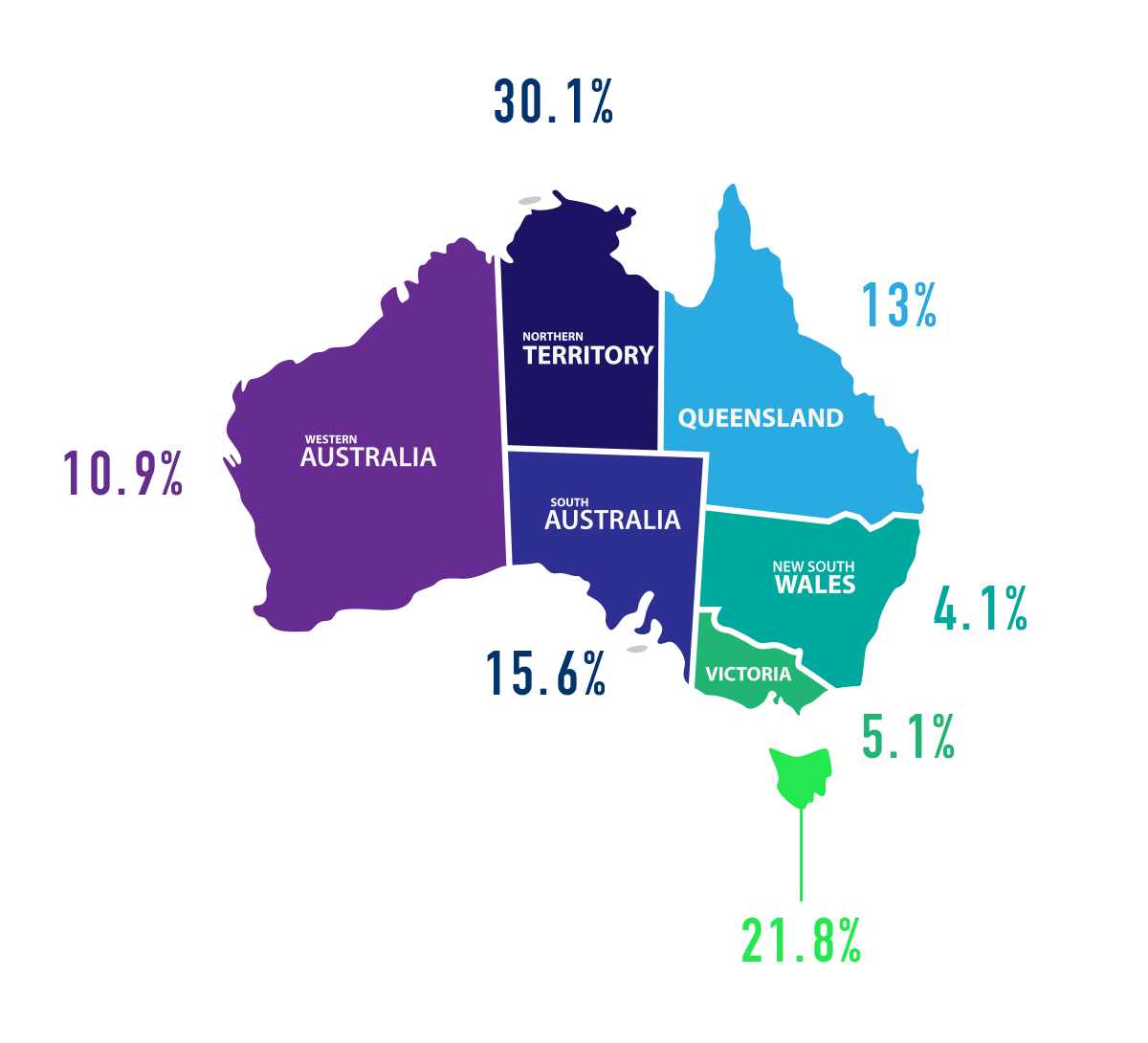
Between July 2015 and June 2016, the ATO compiled the first Register of Foreign Ownership of Agricultural Land. While authorities are unable to disclose personal details and identities of owners, they can tell us about nationalities. Here’s a region-by-region breakdown:

What proportion of land is held by foreign interests?

As you can see, the percentage varies substantially depending on where you are in Australia.

The figures are relatively high in sparsely-populated areas such as The Northern Territory and Tasmania, and comparatively low in New South Wales and Victoria.

 infographics_01

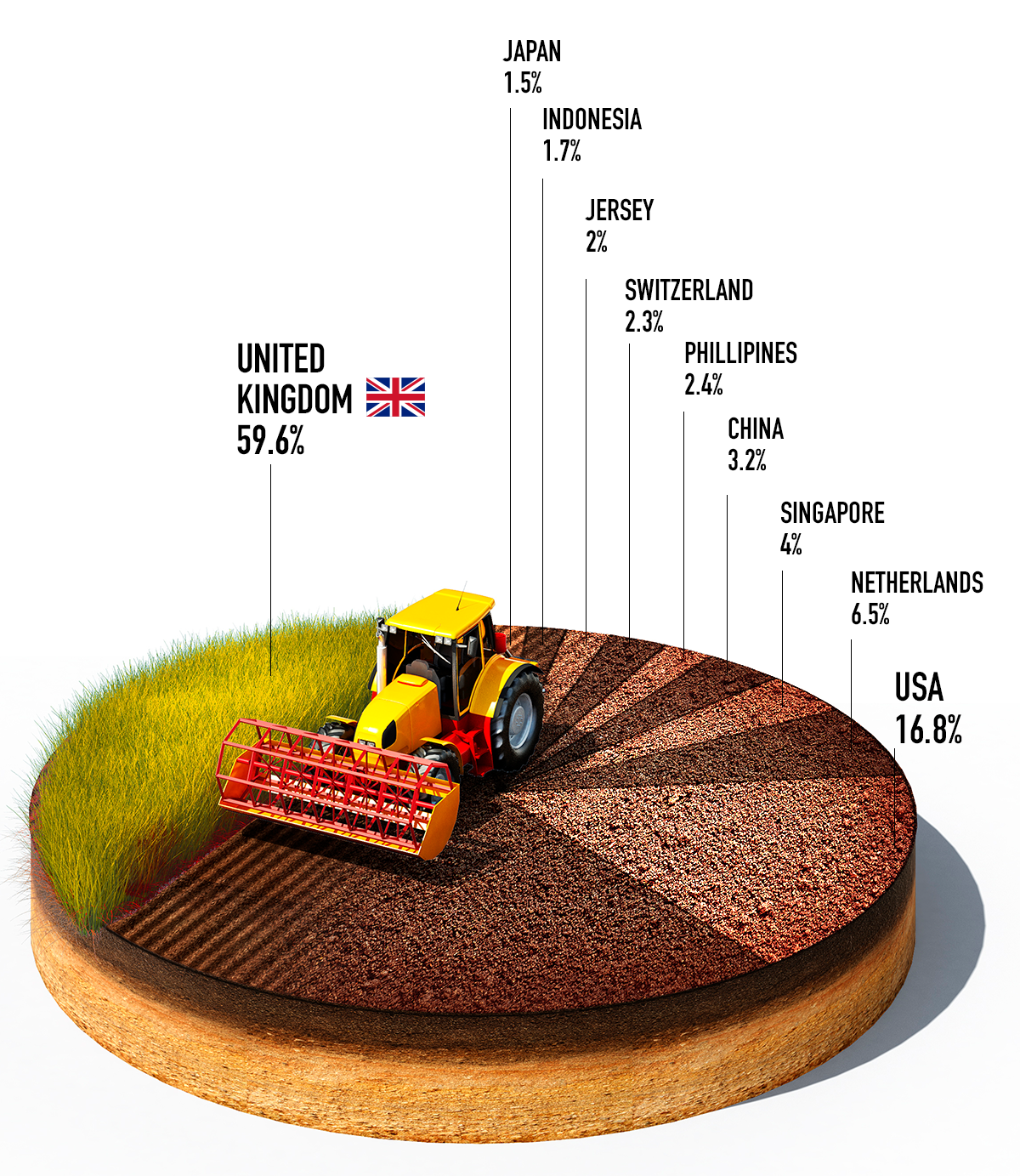
Where are the foreign owners from?

Here is a visual representation of the Top 10 foreign owners by country. At a glance, it’s clear that UK foreign interests are by far the most prevalent, followed distantly by the USA, the Netherlands, Singapore, China and others. This may come as a surprise to some, but there you have it. We didn’t realise Jersey was a major player!infographics_02

What are they using the land for?

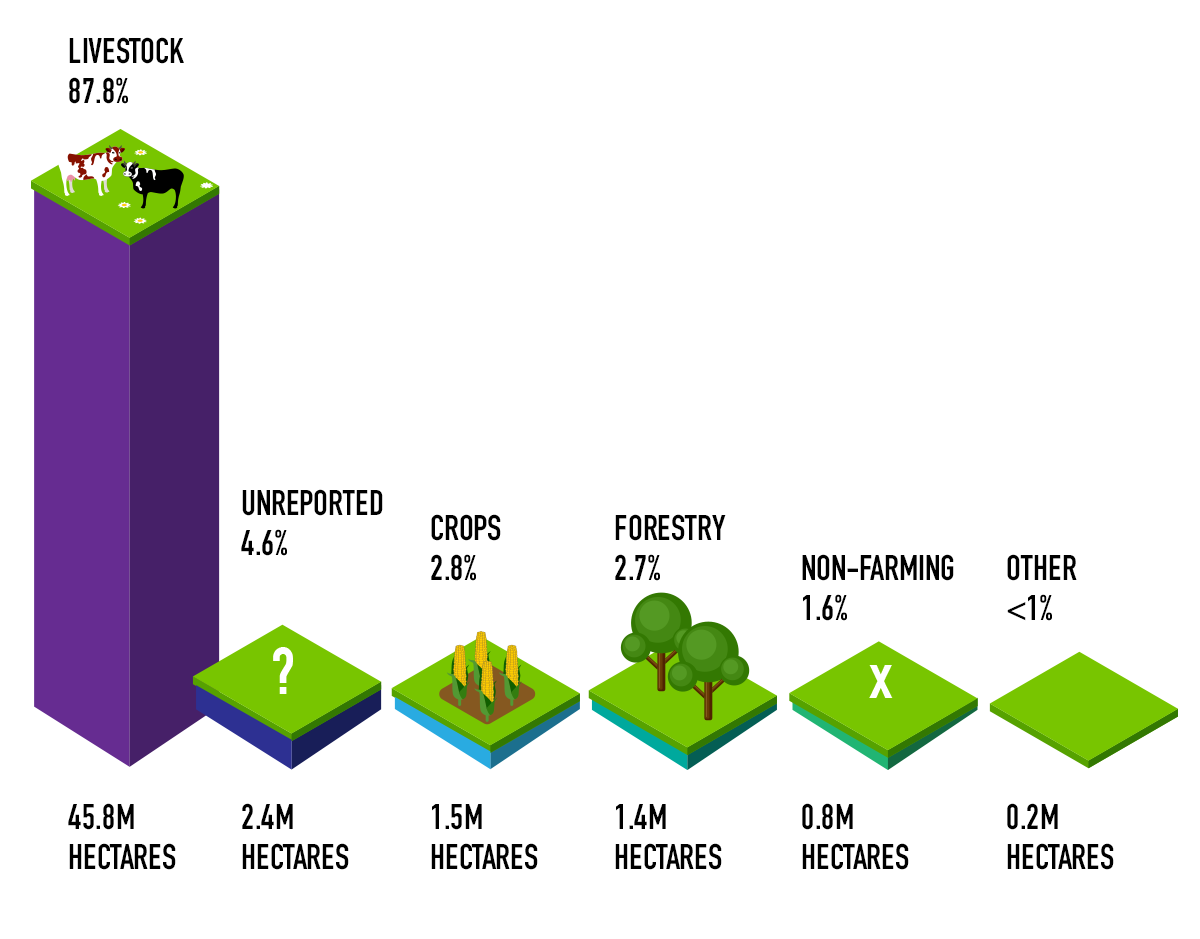
In regards to what this foreign-owned land is producing, for the vast majority, the answer is livestock. Crops and forestry are other recorded purposed.

infographics_04

Officials say that Annual Reports from the Register will now be compiled each financial year, allowing us to see how these figures changes. Watch this space.

Year in review: new FTAs and what they spell for the agriculture industry

It’s all over bar the shouting, and 2015 will go down in history as a big year for landmark FTAs – one signalling unprecedented access to the biggest consumer market on Earth.

We wouldn’t go so far to say it’s been a victory across the board for Australian agriculture, but June’s Australia-China Free Trade Agreement (ChaFTA for short) and October’s Trans-Pacific Partnership (TPP) are set to usher in a new era of prosperity and growth in many key sectors. It looks likely that agriculture’s great white hope, sugar, will stay where it is for now, but who knows what the future will hold?

China-Australia Free Trade Agreement

After 10 years and much negotiation, ancient trade barriers finally buckled when then-PM Tony Abbott and China’s commerce minister Gao Hucheng signed on the dotted line in Canberra.

Demand for food in middle-class China is off the charts and Australia has the means to feed them. The only thing in the way were tariffs. Big ones. ChAFTA goes a long way to opening up the market for agriculture and processed foods, with equal or better access to China than any other FTA partner. Tariffs on some exports will be reduced by up to 30%. Let’s take a look at what’s going down and by how much:

And the winners are:

Beef: tariffs of 12-25 per cent will be wiped out within 9 years of entry into force.
Dairy: all tariffs (currently up to 20 per cent) will be eliminated within 4-11 years. *Translation: we predict big things for infant formula (Aussie brands are in hot demand in China) and ice cream in particular.
Horticulture: tariffs of up to 30% on fruit, vegetables and nuts will be eliminated, most within 4 years. *Translation: macadamias, almonds, walnuts and pistachios will shed their 10-25% tariff. The 11-30% tariff on oranges, mandarins, lemons and all other citrus fruits will also be peeled off.
Sheep and goat meat: tariffs of 12-23 per cent will be gone within 8 years.
Pork: all tariffs (up to 20 per cent) will be scratched within 4 years.
Hides and skins: tariffs of 5-14 per cent will be eliminated within 2-7 years.
Wine and spirits: in four years, tariffs of 14-20 per cent on wine and up to 65 per cent on alcoholic beverages and spirits will be a thing of the past. *Translation: wine imports are booming in China, which could well be a boon for our esteemed Aussie winemakers.
Seafood: tariffs on all seafood exports will be eliminated within 4 years. Including tariffs of up to 15% on fresh abalone and rock lobster within 4 years.
Honourable mentions: barley and sorghum, a range of processed foods and wool also secured victories.

Better luck next time:

Hopes were high, but no inroads were made for sugar or rice growers. The chairman of Canegrowers Queensland told news.com.au: “It’s disappointing given that it’s a huge market. We only wanted to fill in the gap between their domestic production and consumption, but we didn’t gain much traction except a framework for further reviews.”

Trans-Pacific Partnership (TPP)
TPR

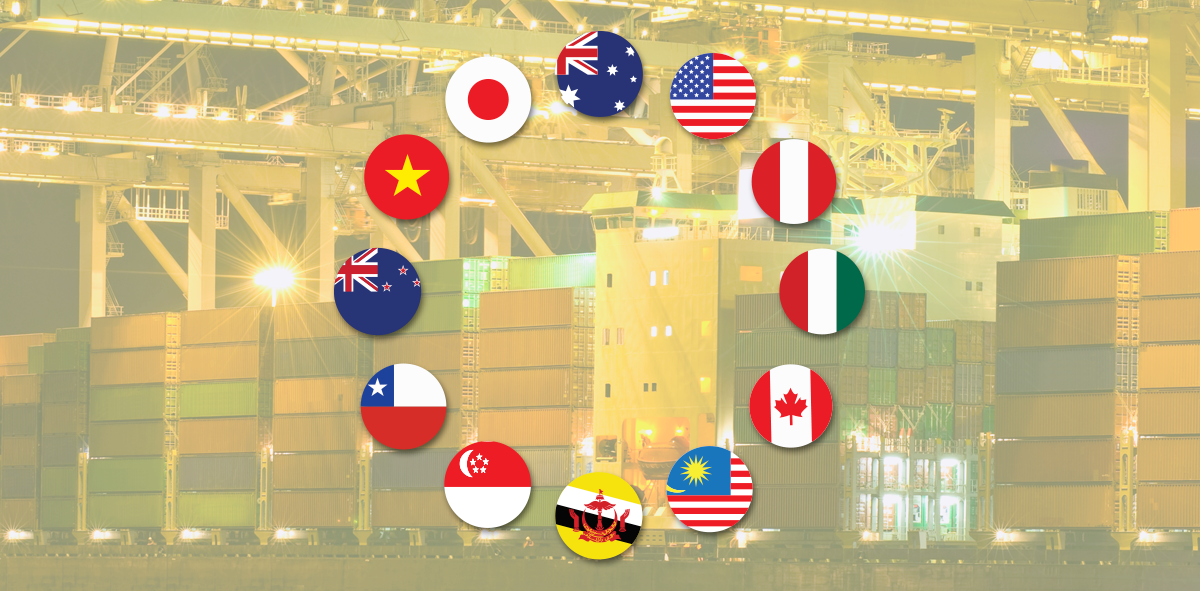
Eight years of debate was finally put to bed last month when 12 Pacific Rim nations signed the biggest free-trade agreement in history, covering 40% of the global economy. We now have agreements in place with countries where previously there were none – Peru, Mexico and Canada. What does this mean for agriculture? Thousands of tariffs will be removed. Not quite as many as hoped, but nothing to be sniffed at.

And the winners are:

Dairy: The TPP clinched victories for Aussie cheese – the deal spells the end of tariffs on some products and paves the way for tariff reductions and new quota allocations for others.
Grains: The TPP will create new quota volumes for wheat and barley exports to Japan (worth approximately $481 million in 2014). Tariffs on exports of Australian wheat and barley will be no more, and the TPP also means new quota access for roasted malt exports.
Rice: It was a no-go zone in ChaFTA, but the TPP will see a new 6000-tonne quota access to Japan, plus reduced tariffs on rice preparation products, plus an amendment to the WTO quota of an extra 60,000 tonnes of medium grain rice for processing use.
Wool and cotton: All remaining tariffs on Australian raw wool and cotton exports to TPP countries will be removed. The TPP will also deliver improved rules of origin for textiles, potentially upping demand for Australian fibre products.

Better luck next time:

Dairy: They say it’s best to shoot for the Moon, but some were disappointed in the dairy deal – saying it failed to live up to its full potential of total tariff elimination.

Did you know?

Australia currently has 9 FTAs up and running and 7 more under discussion

*NB: ChaFTA’s status is ‘signed’ and TPP’s is ‘negotiations concluded’.
Google tracking code